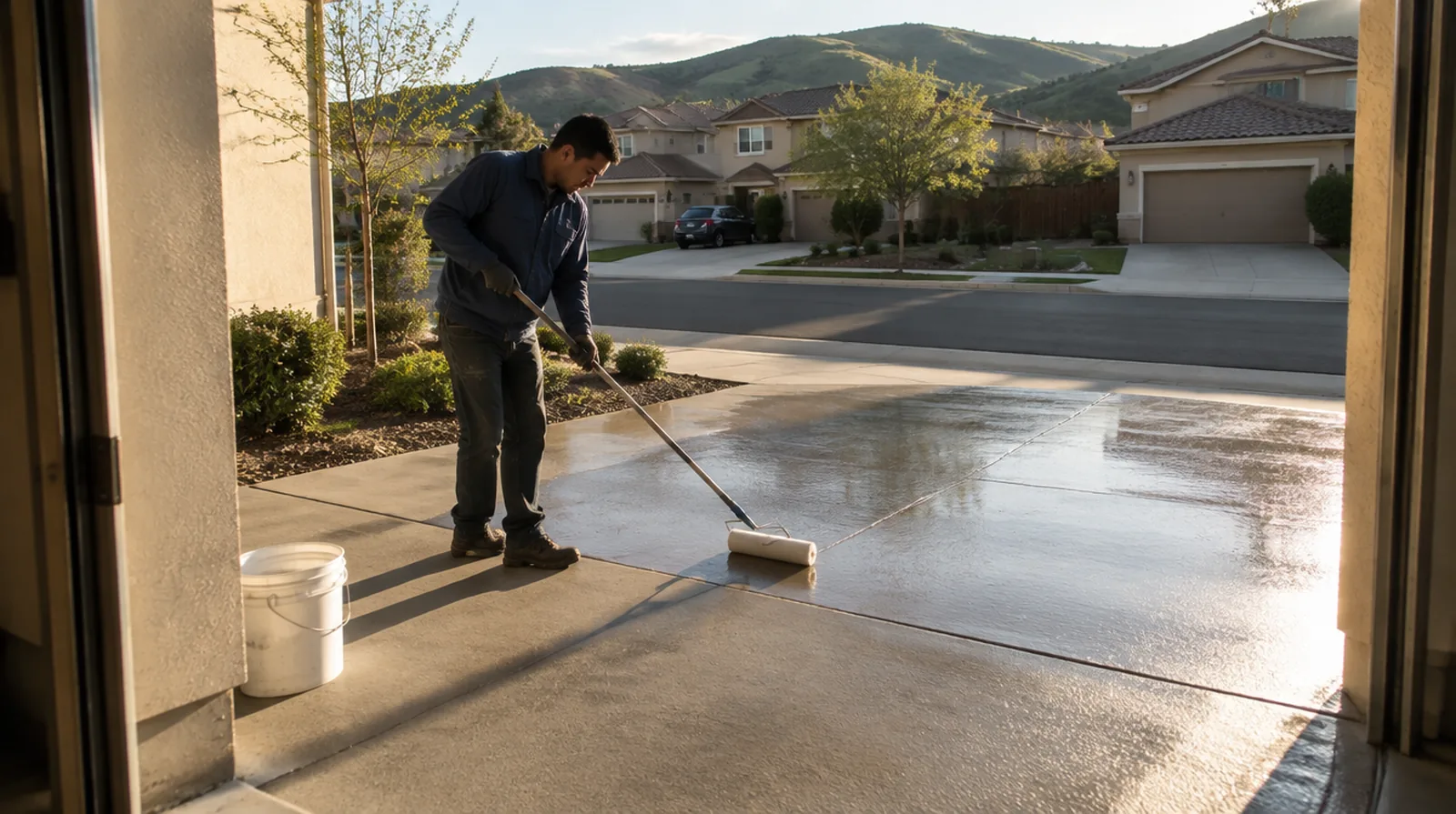
What we seal
Driveways, patios, walkways, pool decks and stamped concrete.
Why it helps
Union City's rainy winters soak into bare concrete, and clay soils move slabs. A sealer slows water absorption and makes stains easier to clean.
Our process
Clean, degrease, dry and seal with penetrating or topical products.
Which sealer is best?
Penetrating for a natural look, topical for sheen.
How often should I reseal?
Every few years.
Driveway joints and weeds
Clay soil movement opens the joints between driveway panels, and weeds take root in the gaps. Before sealing, we clean out the joints and can fill them with a flexible sealant. That keeps water from getting under the slab and cuts down on weeds.
Stamped patios in newer subdivisions
Many newer homes off Alvarado-Niles Road have stamped or colored patios that fade in the sun. A tinted or clear wet-look sealer brings back color and depth. We test a small area first so you can see the finish.
Concrete sealing for Union City's mix of homes
Older homes in Decoto and newer subdivisions in the hills both have driveways, patios and walks that suffer from winter rain, sprinkler water and oil drips. Bare concrete absorbs all of it, then stains and slowly weakens. Concrete sealing in Union City slows that down by keeping water and oil at the surface where they wash away.
If weeds grow in my driveway joints, will sealing help?
We clear the joints first. A joint sealant can keep soil and seeds out better than an open gap, and the surface sealer protects the slabs.
If my patio is stamped and colored, which sealer is right?
An acrylic sealer refreshes color and adds a light sheen. We add grit where people walk barefoot.
If it rains during the week, can you still seal?
We need a dry surface and a few dry hours after application, so we reschedule if needed.
A sealing day
We clean the surface, treat oil stains, let it dry and apply the sealer with sprayers and rollers. You get written walk and drive times.
Choosing between sealer types
Penetrating silane and siloxane sealers soak into the concrete and keep a natural look while letting vapor escape, which suits driveways and older walks. Acrylic sealers sit on top, add sheen and refresh color, so they suit decorative patios but wear faster in tire paths. We recommend based on where the concrete is, how it is used and how much shine you want. Reapplication timing depends on sun and traffic.
Pool surrounds
Pool decks get a grit additive so wet feet keep their footing.
Sealing stamped patios in Union City backyards
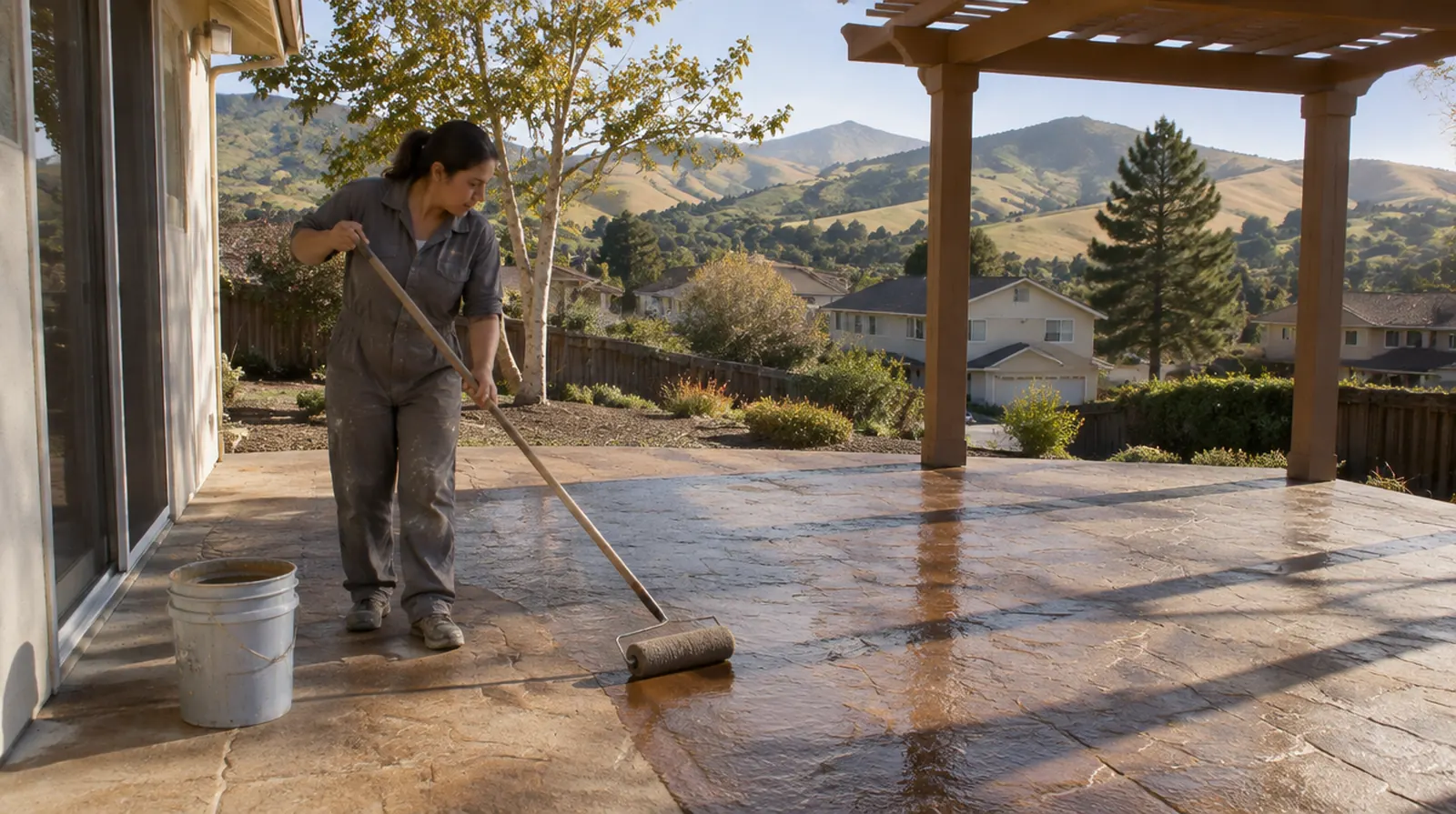
Stamped and colored concrete patios are common in Union City backyards. Sealing helps keep the color rich and protects the surface.
Why stamped concrete needs sealing
Sun fades color, and water and dirt can dull the surface. A sealer helps protect against both.
Cleaning first
We clean the patio, removing dirt, leaves and old sealer that is peeling.
Choosing a finish
Some people like a wet look that deepens color. Others prefer a natural matte finish. We can show samples.
Grip
Patios near pools or that get wet need grip. We can add texture to the sealer.
Timing
We pick dry days and keep people and furniture off the patio while it cures.
Resealing
We let you know signs that it is time to reseal.
Other areas
We also seal driveways, walkways and pool decks.
Furniture and grills
Patio furniture legs and grills can scratch or stain sealed concrete. Felt pads under chair legs and a grill mat under the barbecue help protect the finish between resealing.
Edges and steps
Steps, edges and areas next to planters often wear first because of foot traffic and sprinkler water. We pay extra attention to these spots during cleaning and sealing so the whole patio wears evenly over time.
Questions before booking
Send us a few photos of your patio, including any stains or peeling sealer, and we can tell you what prep it will likely need before we visit.
Mid-spring and early fall usually offer the steadiest dry stretches for this work.
Seal your concrete
Call (510) 892-5684.